Constitutional Law · Civil Rights · Elections · Electoral Systems·May 8, 2026
Alabama asks Supreme Court to strip its second Black district
Alabama races to erase its second Black congressional seat before May 19 primary

Photo: AP Photo/Kim Chandlersource ↗
On May 8, 2026, the Alabama legislature passed a congressional map with one Black-majority district instead of two. Within one hour, Attorney General Steve Marshall filed emergency applications directly to the U.S. Supreme Court asking it to vacate a federal injunction that required the state to keep two Black opportunity districts through 2030. The legislature also authorized Governor 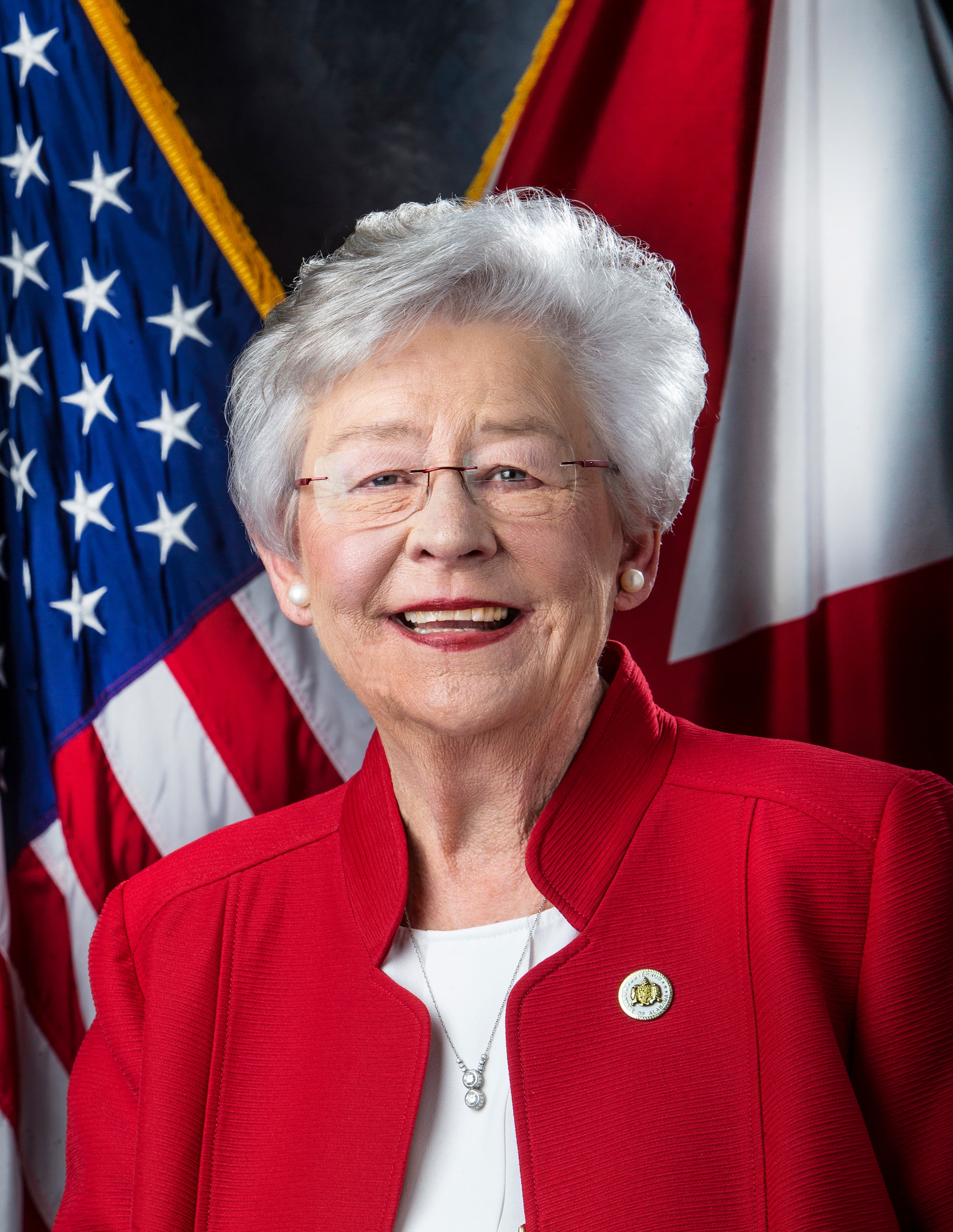 Kay Ivey to call special summer primaries in four congressional districts if the Court agrees, voiding results from the May 19 primary already underway. A three-judge federal panel in the Northern District of Alabama denied the state stay request the same afternoon, ruling only the Supreme Court had authority to act. Justice
  Clarence Thomas, the 📖circuit justice for the 11th Circuit, set a Monday deadline for plaintiffs to respond. The maneuver exploits the Supreme Court's April 29, 2026 ruling in Louisiana v. Callais, which gutted Section 2 of the 📖Voting Rights Act and made it far harder for minority voters to challenge racially discriminatory maps.
Key facts
The Alabama legislature convened in a special session called by Gov. Kay Ivey on May 1, 2026, and on May 8 passed House Bill 1 authorizing a replacement congressional map with one Black-majority district instead of two. The state had been under a federal court order since October 2023, the result of  Allen v. Milligan, requiring it to maintain two districts where Black voters have a meaningful opportunity to elect candidates of their choice. Ivey signed the legislation the same afternoon, .
Within one hour of the legislature passing HB 1, Attorney General Steve Marshall filed emergency applications in three related cases, Milligan v. Allen, Caster v. Allen, and Singleton v. Allen, asking the Supreme Court to vacate the lower court injunction by May 14 at 10 a.m., five days before Alabama's May 19 primary. Marshall's 25-page filing argued the injunction can't be reconciled with Section 2 of the 📖Voting Rights Act as reinterpreted by the Court's .
The applications went directly to Justice Clarence Thomas, the 11th Circuit's 📖circuit justice. Thomas, who has dissented from every prior ruling requiring Alabama to maintain a second Black district, for plaintiffs to respond at 5 p.m. EDT.
A three-judge federal panel in the Northern District of Alabama, composed of 11th Circuit Judge Stanley Marcus, District Judge Anna Manasco, and District Judge Terry Moorer, denied Alabama Secretary of State Wes Allen's emergency stay request the same day. The panel ruled it lacked jurisdiction: "We do not have the authority to issue an order that upends Alabama's status quo, especially in the middle of an election, while our injunction establishing that status quo is well under review in the nation's highest court," the judges .
The ruling sent the fight exclusively to the Supreme Court, where Thomas and the full conservative majority will decide whether to lift the injunction before the primary.
The new map is the same one Alabama drew in 2023, a map already struck down by a three-judge federal panel for failing to create a second Black opportunity district. The court-ordered replacement map it seeks to eliminate led to the , who became only the fourth Black person ever elected to Congress from Alabama. Figures won with 54.6% of the vote against Republican Caroleene Dobson.
If the Supreme Court lifts the injunction, the 2nd Congressional District would revert to boundaries designed to make it a Republican-leaning seat, and Figures' district would effectively cease to exist.
HB 1 authorizes Ivey to void primary results in four congressional districts, the 1st, 2nd, 6th, and 7th, and call summer replacement primaries if a court lifts the injunction. The 2nd district is Figures' seat. The 7th is held by Rep. Terri Sewell (D), Alabama's other Black member of Congress. A legislative over fiscal years 2026-2027, reimbursed to counties running the additional contests.
The move means some Alabamians could vote twice in congressional primaries, first under the court-ordered map on May 19, then again under the 2023 map if the Supreme Court acts. Absentee ballots were already being cast when the legislation passed.
The backdrop is Louisiana v. Callais, decided 6-3 on April 29, 2026. Justice Samuel Alito wrote the majority opinion for Roberts, Thomas, Gorsuch, Kavanaugh, and Barrett, holding that Louisiana's second Black-majority congressional district was an unconstitutional racial gerrymander and that Section 2 of the 📖Voting Rights Act doesn't require states to draw majority-minority districts. Justice Elena Kagan dissented, joined by Sotomayor and Jackson.
Alito's opinion included a single line stating the ruling didn't affect Allen v. Milligan directly, but AG Steve Marshall immediately argued that Callais changed the legal standards so fundamentally that the Milligan injunction could no longer stand. The a tectonic shift that removes federal voting rights law as a constraint on 📖partisan gerrymandering in states where race and party are correlated.
Alabama's 📖redistricting history since 2021 is a record of escalating defiance of federal courts. The state drew its original 2021 map with one Black-majority district despite Black residents comprising 27% of the population. A three-judge panel blocked it in January 2022. The Supreme Court, in a 5-4 decision in Allen v. Milligan, upheld that ruling in June 2023. Alabama then drew a second 2023 map that the same federal panel struck down for still failing to create a genuine Black opportunity district. Only after a court-appointed special master drew a replacement map did the state hold elections under a compliant plan.
Alabama agreed, as part of settling the litigation, not to change its congressional map until after the 2030 Census unless the Supreme Court overturned the underlying case. AG Marshall now argues Callais effectively accomplished that.
Senate Minority Leader Bobby Singleton (D-Greensboro), a Black Democrat, confronted Republican colleagues on the Senate floor: "We have just only been voting since 1965, and you are now trying to take that voice away from us." State Rep. Pebblin Warren (D-Tuskegee) to argue the 📖redistricting effort replayed historical disenfranchisement. Protesters occupied the House gallery singing civil rights anthems; officers removed at least one demonstrator, prompting a recess.
Mitchell Brown, voting rights senior counsel at the Southern Coalition for Social Justice, told American Community Media the Supreme Court "has all but said that Section 2 is nullified."
Alabama is one of at least four Southern states that rushed to redraw congressional maps within days of the Callais ruling. Tennessee enacted a new map on May 7, splitting Memphis into three Republican-leaning districts. Louisiana and South Carolina were mid-session when Alabama's bill passed. The noted that without federal VRA constraints, future limits on extreme gerrymanders depend on state constitutions and state courts.
The 📖Purcell principle, which holds that courts shouldn't change election rules close to an election to prevent voter confusion, cuts both ways here. AG Steve Marshall argued Purcell limits federal courts from blocking Alabama's legislation. Plaintiffs countered that voiding an in-progress election with absentee ballots already cast is exactly the kind of chaos Purcell was .
Related Topics
6⚖️
SCOTUS vacates order requiring Alabama's second Black district
On May 11, 2026, the U.S. Supreme Court issued an unsigned 6-3 order vacating the district court's injunction that had required Alabama to maintain two majority-Black congressional districts. The ruling came eight days before Alabama's May 19 primary and twelve days after the Court's April 29 Louisiana v. Callais decision gutted Section 2 of the Voting Rights Act. The order in Allen v. Caster (No. 25-243) lets Alabama use its 2023 congressional map, a map a federal court had already found to violate the VRA and to constitute intentional racial discrimination under the 14th Amendment. Alabama Attorney General Steve Marshall filed the emergency application on May 8 after Gov. Kay Ivey signed special session legislation authorizing new primaries in up to four districts if courts cleared the way. The practical consequence is immediate. Alabama's congressional delegation shifts from 5 Republicans and 2 Democrats to 6 Republicans and 1 Democrat. Rep. Shomari Figures, who won the redrawn majority-Black 2nd District in November 2024, was the first time in decades Alabama sent two Black members to Congress simultaneously. He now faces a district reconfigured to favor Republicans. Justice Sonia Sotomayor dissented, joined by Justices Elena Kagan and Ketanji Brown Jackson, arguing the Court discarded a "meticulously documented" finding of intentional discrimination without sound basis.
101% match
25 questions
✊
Thousands rally in Alabama after Supreme Court guts VRA protections
A coalition of more than 90 civil rights, faith, labor, and community organizations staged the "All Roads Lead to the South" National Day of Action on May 16, 2026, beginning with a march across the Edmund Pettus Bridge in Selma and culminating in a mass rally at the Alabama State Capitol in Montgomery. The mobilization responded to the Supreme Court's 6-3 ruling in Louisiana v. Callais, which required plaintiffs to prove intentional racial discrimination under Section 2 of the Voting Rights Act. Within days of that April 29 decision, Alabama Attorney General Steve Marshall filed emergency motions to dissolve injunctions protecting two majority-Black congressional districts, and Governor Kay Ivey signed legislation scheduling special elections under redrawn maps. Organizers framed the rally as the launch of a sustained movement against what they called a coordinated effort to dismantle Black political representation across the South.
99% match
29 questions
🗳️
SCOTUS guts VRA Section 2, opens redistricting to GOP
The Supreme Court ruled 6-3 on April 29 that Louisiana's second majority-Black congressional district was an unconstitutional racial gerrymander, a decision that fundamentally rewrites how Section 2 of the Voting Rights Act can be enforced. The case, Louisiana v. Callais, was authored by Justice Samuel Alito and effectively reinstates an intentional-discrimination standard that Congress had specifically repealed in 1982. Justice Elena Kagan read her dissent aloud from the bench, a rare signal of deep disagreement, saying the ruling renders Section 2 'all but a dead letter.' The ruling reverses a precedent set less than three years ago when the Court required Alabama to draw a second majority-Black district. Louisiana has roughly one-third Black population but had only one majority-Black district before court orders required a second; that second district is now invalidated. Political scientist Jonathan Cervas of Carnegie Mellon University, who has served as a special master in redistricting cases, said the Voting Rights Act 'as a means to protect minority voters from vote dilution is essentially dead.' Because most filing deadlines for 2026 elections have passed, the ruling's biggest redistricting impact is expected in 2028, when Republicans could redraw more than a dozen Democratic-held seats previously protected under the VRA.
97% match
25 questions
🗳️
Alabama splits its primary under post-Callais maps
Alabama held a fractured primary on May 19, 2026, the first federal election conducted under congressional maps redrawn after the Supreme Court's April 29 ruling in Louisiana v. Callais gutted Section 2 of the Voting Rights Act. Voters in only three of Alabama's seven congressional districts cast ballots that will actually count toward choosing party nominees. Residents of the 1st, 2nd, 6th, and 7th districts, the four redrawn under a Republican-drawn 2023 map that federal courts had previously struck down as racially discriminatory, had their primary votes voided and must return to the polls on August 11 for a special primary. The August election, which carries no runoff provision, will cost Alabama taxpayers an estimated $4.4 million. The open U.S. Senate seat left by Tommy Tuberville, who gave up his seat to run for governor, also appeared on the May 19 ballot. Rep. Barry Moore (endorsed by President Trump on January 17, 2026), Attorney General Steve Marshall, and former Navy SEAL Jared Hudson competed in a tight three-way race. Pre-election polls showed Moore at 28%, Marshall at 27%, and Hudson at 24%, a spread narrow enough that a June 16 runoff looked likely if no candidate cleared a majority.
95% match
30 questions
🗺️
Florida Rushes Gerrymandered Map One Hour After SCOTUS Makes Callais Ruling Effective — National Redistricting Scramble Follows
On May 4, 2026, one hour after Louisiana v. Callais became effective, Governor Ron DeSantis signed legislation redrawing Florida's congressional map outside the regular decennial cycle. The 83-28 House and 21-17 Senate votes in a special session enacted the fastest mid-decade redistricting since Texas 2003. The new map projects four additional Republican seats by packing and cracking Democratic voters in South Florida and the Tampa Bay area. Within days, Louisiana, Tennessee, Alabama, Mississippi, and South Carolina announced similar plans, triggering a national scramble to exploit Callais's new Section 2 framework before courts could intervene.
93% match
25 questions
🗺️
Mississippi governor cancels redistricting session after court ruling
Gov. Tate Reeves canceled a special legislative session on May 13, 2026, removing the immediate threat to Mississippi's congressional map two months after voters already chose their primary candidates. The session was originally called to redraw state Supreme Court districts after a federal judge ordered new lines under the Voting Rights Act. But the 5th Circuit Court of Appeals vacated that order on May 11, citing the U.S. Supreme Court's April 29 decision in Louisiana v. Callais that narrowed Section 2 protections. Trump and Republican lawmakers had pressured Reeves to add congressional redistricting to the session agenda, targeting Rep. Bennie Thompson's majority-Black 2nd District. Reeves refused the expansion, citing logistical constraints from the March 10 primaries already completed. The cancellation handed Democrats a temporary reprieve in the broader Southern redistricting push but left the door open for map changes before 2027 statewide elections.
91% match
38 questions
Related
Categories that may be relevant to you
5 topics available

May 23, 2026
DOJ scrubs hundreds of Jan. 6 prosecution records from website
🔍
May 22, 2026
FTC fines Cox Media Group $930K for fake AI listening ad service
May 22, 2026
Warsh sworn in as Fed chair at White House in first such ceremony since 1987
May 22, 2026
Colorado closes legal gap for defendants found unfit to stand trial
May 22, 2026
Gabbard resigns as director of national intelligence
View All Government Topics
770 topics
28 questions
Start the review